
The MAC and Fairview bring heart-lung life support to MSP Airport in a national first


The MAC and Fairview bring heart-lung life support to MSP Airport in a national first
November 12, 2026
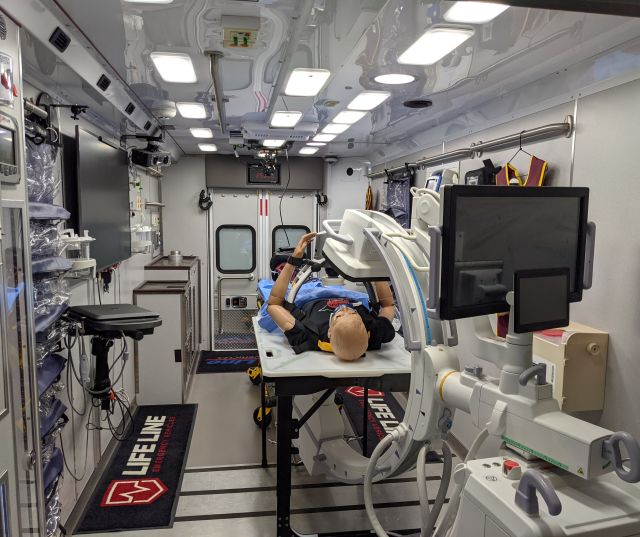
Medical consortium brings advanced, on-site care to cardiac emergencies at MSP Airport
A unique medical partnership between the Metropolitan Airports Commission (MAC) and Fairview’s Minnesota Mobile Resuscitation Consortium is bringing advanced cardiac care closer to passengers, visitors and employees at Minneapolis-St. Paul International Airport (MSP).
MSP’s public safety teams have partnered with the Minnesota Mobile Resuscitation Consortium, a Fairview program that works with health systems, emergency medical services and the University of Minnesota Medical School, to deploy a mobile cardiac care unit equipped with extracorporeal membrane oxygenation (ECMO) technology. ECMO can temporarily take over the functions of a patient’s heart and lungs, providing critical support during life-threatening cardiac emergencies.
Cardiac arrests occur at airports every year, and although bystander CPR and AEDs are highly effective first-line treatments, some patients need advanced support to survive. These emergencies can happen deep inside secure terminal areas, far from hospital-based care.
When a cardiac emergency is reported to the airport’s Emergency Communications Center (911), the ECMO unit will be dispatched from the Edina Fire Department alongside the MSP Airport Fire Department, MSP Airport Police Department and the airport’s contract ambulance service. First responders will provide initial treatment and transport the patient to a predetermined location near the terminals, where the Fairview mobile ECMO team can begin advanced care.
“MSP is the first airport in the United States to utilize a mobile cardiac care unit that allows us to bring highly specialized responders and equipment directly to our campus,” said MSP Fire Chief Mark Watczak. “We know early intervention is critical in the chain of survival for cardiac patients. The rapid deployment of the ECMO unit can significantly reduce the time it takes for patients to receive advanced, life-saving treatment.”
ECMO-trained clinicians can initiate treatment on-site before transporting the patient to a hospital. In addition, cardiology physicians can provide real-time guidance through virtual technology while the patient is receiving care. For patients in prolonged cardiac arrest, survival is seven to eight times higher with ECMO than without it. By bringing the ECMO team to the airport, critical treatment can begin sooner, dramatically reducing delays when every minute counts.
“Building this program has required a shared commitment across hospitals, first responders and community partners,” said Dr. Demetris Yannopoulos, medical director for the Minnesota Mobile Resuscitation Consortium, cardiologist with the University of Minnesota Physicians who cares for patients at Fairview Minneapolis University Hospital and director for the Center for Resuscitation Medicine at the University of Minnesota. “Our partnership with MSP extends that work to one of Minnesota’s busiest gateways, bringing advanced resuscitation directly to patients when every minute matters. Behind all the science and technology is one purpose: giving someone another chance to return home to their family.”
Fairview owns and leads the Minnesota Mobile Resuscitation Consortium, supplying clinical personnel for the program along with Lifelink III. Other partners include Regions Hospital and Methodist Hospital (HealthPartners) and North Memorial Health. The consortium was launched in 2019 at the University of Minnesota Medical School with an $18.6 million grant from the Helmsley Charitable Trust. Fairview later took ownership of the consortium, and in 2023 the Helmsley Charitable Trust awarded Fairview more than $10 million to expand mobile ECMO across the region.