MSP Airport Police Department launches behavioral health unit with Hennepin County
Inside MSP's new behavioral health unit
The MSP Airport Police Department’s innovative new behavioral health unit is transforming the response to mental and behavioral health crises at the airport.
In less than a year, the team has handled more than 120 referrals — helping a homeless parent with young children secure bus tickets and essentials to reach housing in New Orleans, supporting an airport employee through suicidal ideation and connecting them to therapy, and assisting a passenger en route to a treatment facility to find safe lodging and rebook a missed flight.
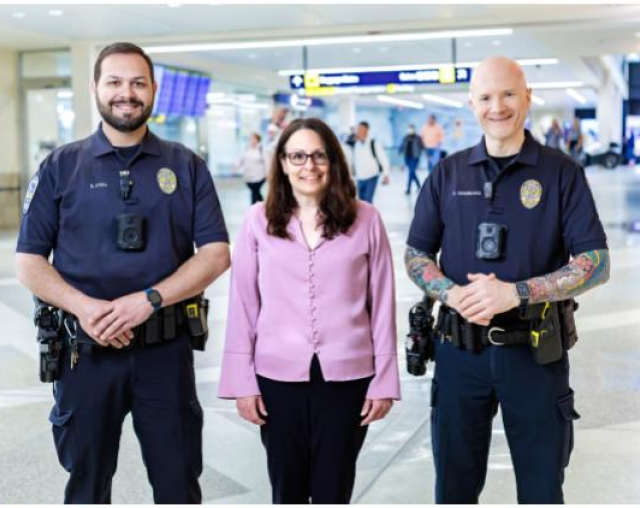
Longtime Airport Police Officers Nagib Etoll and Roby Desubijana, along with licensed clinical social worker Victoria Romberg, shared these powerful examples and more during December’s Lunch and Learn with MAC CEO Brian Ryks.
Origins of the unit
A rarity among airports nationwide, the behavioral health unit formed in March 2025 in response to a growing need for real-time support for passengers and employees in crisis.
“Our police officers are highly skilled in communicating with and supporting individuals in crisis in general, especially those experiencing mental health challenges,” Roby said.
But traditional policing alone isn’t always enough. So MSP partnered with Hennepin County to embed a social worker alongside officers to create a team better equipped to address root causes, like homelessness and addiction, rather than defaulting to enforcement.
“Mental health-related calls have just continued to increase in number and severity over the years,” Nagib said. “We had a lot of repeat offenders, and we encountered a lot of people who were not committing any criminal offenses — they just were in need of social services.”
How it works
The behavioral health unit operates Monday through Thursday from 8 a.m. to 6 p.m. Patrol officers assess calls first, and if mental health concerns arise, they request Nagib, Roby and Victoria.
“We’re generally a secondary response,” Roby said. “If a call is broadcast over the radio and it’s clearly related to a mental health crisis situation, our unit will respond directly. We also engage in proactive outreach with airport tenants.”
More than 80% of the units calls involved mental health needs, and 30% were related to homelessness. Top services include transportation to a behavioral health center and connecting people with case management, basic necessities and shelter.
The ability to respond in person and follow up afterward is what makes the program unique, Victoria said.
“Sometimes they need shelter, sometimes they need resources for food — whatever it may be,” she said. “I can respond in real time with the officers and also I have the capability of being able to follow up with the people after the fact, so they don't slip through the cracks. I can follow up and say, ‘Hey, how are you doing? Do you need any help with anything else?’ And so that’s a piece I think that’s really important that I can provide.”
Need help? Here’s where to start:
· In an emergency, always call 911.
· If you are in crisis, call the national Suicide and Crisis Lifeline at 988, or contact the Crisis Text Line by texting TALK to 741741.
Editor's note: This page has been updated to reflect the unit's new name, the behavioral health unit (BHU).