
Tenant Design Guidelines part 2: Architectural Design Criteria
Updated: 06.10.2026
Tenant Design Guidelines part 2: Architectural Design Criteria
- Storefront
- Storefront
- Storefront construction shall extend from the floor slab to the horizontal neutral bulkhead or ceiling above and shall abut the vertical demising systems at both sides of the demised concession tenant’s premises. Upon request, Landlord will consider design elements that extend beyond tenant lease line.
- Neutral piers and fascia will be built by the Tenant, with Landlord-selected finishes abutting the lease line to be selected by the Landlord’s architect. If an existing Tenant space is re-demised, it shall be the Tenant’s responsibility to construct a new neutral pier.
- Any soffit or neutral pier returns exposed by recessing the storefront shall be finished to match the Landlord’s neutral surround construction and finishes by the Tenant at Tenant’s cost.
- The Tenant may not attach to or support their storefront from any part of the concourse neutral fascia (except for lateral support only).
- No element of the storefront may extend beyond the concession tenant’s lease line with the exception of specified storefront blade signs where permitted by the specific criteria. The CPIT process does allow for the Tenant to propose elements that extend beyond the lease line for consideration.
- All storefronts, except entry doors, shall have a minimum 6” high base of durable and maintainable material integrated with the storefront design. Acceptable materials include brass, chrome, aluminum, natural stone, or hardwood.
- High transparency in the storefront design is encouraged. The Concession Tenant’s overall storefront area shall have a minimum of 75% visual transparency/openness unless otherwise specified in the subsections included under the location-specific Design Guidelines.
- Storefront Entries
- A limited portion of the Tenants’ overall storefront area shall be designated as storefront entries.
- Storefronts shall have total opening width at least 1/3 of the total storefront leased-area width.
- If the Tenant’s storefront faces onto two common area concourses, tenant storefronts may have as many as two open entryways.
- Openings or setbacks from the storefront lease line will be prohibited within 5’-0” of any demising pier unless otherwise specified within specific Design Guidelines.
- No part of any door swing shall extend beyond the storefront, lease line, construction barrier or into the airport’s public corridors.
- Any flooring between the lease line and the Tenant storefront or closure line is the responsibility of the Tenant and must either match the common area flooring or match the Tenant floor finish. Common area flooring finishes vary depending on the location in the airport and may be terrazzo, carpet, or tile.
- Electronic surveillance or other shoplifting detection devices and security systems shall be the responsibility of the tenant and integrated within Tenant’s storefront design, freestanding posts or columns. Suspended boxes, suspended rails or other exposed equipment or decals are not permitted.
- The soffit at the recessed entries shall be a minimum of 8’-6” above the finished floor, unless otherwise specified elsewhere in the Tenant Design Guidelines.
- Recessed down lights are required for the recessed entry area. Illumination of these lights must be controlled by a time clock (see Section 3.6).
- Storefront Closures
- The Tenant shall provide a new storefront closure system. The following systems are permitted. In the Main Mall, the MAC’s preference is for a glass system.
- Recessed, hinged outswinging doors with multipane glass, fully glazed, or frameless glass doors on pivots. Doors must not swing beyond the lease line when fully opened.
- Sliding glass doors which slide behind one another and stay open; these doors must be pocketed in and above the storefront enclosure unless specifically approved by the Landlord.
- Side folding or overhead coiling grilles are acceptable as long as all portions of the frame or track that are visible match the metal finishes used elsewhere in the storefront. Grilles must be independently supported. The Landlord’s structure may be used for lateral support only. The structural support for the rolling grille must be incorporated into the Tenant’s storefront design.
- If side folding grilles are installed, provide access for cleaning pockets.
- The Tenant shall provide a new storefront closure system. The following systems are permitted. In the Main Mall, the MAC’s preference is for a glass system.
- Display Areas
- Display area is defined as the first 5’ of the Tenant area beyond the lease line.
- The use of creative display areas is strongly encouraged. Innovative merchandising, quality materials and appropriate lighting should be used to convey the Tenant’s merchandise identity and generate activity and excitement.
- Digital displays are allowed provided they have no sound, do not project advertisements nor broadcasts, and all content is approved by the Landlord.
- Floor finishes shall be limited to durable materials such as stone, ceramic tile, and wood. Carpet and vinyl flooring are prohibited in this area.
- All show windows shall be adequately lighted and ventilated. This area shall be illuminated with track lights, recessed lighting, or approved specialty lighting.
- Lighting in this area shall be on a dimmer. Glare visible to the common area will not be permitted.
- No acoustical tile ceiling will be permitted in display areas.
- Tenants are encouraged to provide ceiling heights as high as possible within the display area.
- All fixtures shall be professional and industry standard for display windows. No pegboard, slatwall, or metal shelving of any kind is permitted.
- No signs shall be taped or fastened to the display windows or hung from the soffit.
- No checkout counters, temporary sale racks or mass merchandising systems (slatwall) are allowed in the display area.
- Storefront Finish Materials
- All storefronts shall be constructed of the highest quality, durable materials that can easily be maintained. Tenants are encouraged to use materials in a creative manner. All materials and their finished installation are subject to the approval of the Landlord. Storefront material must comply with the building code for flame spread and smoke development ratings and the Design and Construction Sustainability Requirements.
- Acceptable Materials:
- Marble, granite, limestone and other natural stone products
- Wood-top grade mill quality, natural or stained finish hardwood
- Ceramic tile
- Decorative finished metals such as polished chrome, stainless steel, brass, bronze, anodized aluminum or factory painted steel may not comprise more than 10% of the storefront.
- Frameless clear glazing of tempered or laminated safety glass with polished exposed edges
- Framed clear glazing with wood or metal glazing mullions, only if acceptable to Landlord based on Tenant’s design intent
- Ornamental glass, such as tinted, etched, sandblasted, stained, beveled, or leaded
- All glass used in a store front must be safety glazing
- Any other materials approved by the Landlord
- Restricted Use Materials:
- Special coatings such as Zolatone and Polomyx may be allowed at the Landlord’s discretion. These special coatings will only be considered when used in limited areas, as accents, when applied to sound, smooth durable substrates and in areas inaccessible to the public.
- Unacceptable Materials:
- Simulated materials of brick, stone or wood, except as noted in Restricted Use Materials
- Painted gypsum board
- Wallpaper or wallcovering
- Rustic materials such as rough wood, “distressed” wood, diagonal wood siding, or used brick
- Plywood paneling
- Hardboard or high-density particle board
- Pegboard in any form
- Mill finish aluminum or field painted metal
- Cork or cork tile
- Carpet or fabric
- Plastic laminates
- Plexiglas, fiberglass sheeting, or mirror
- Other materials which, in the sole opinion of the Landlord, are of poor quality, inappropriate finish, or incompatible with adjacent Tenant or mall finish material.
- Materials that do not meet the Sustainable Design and Construction Requirements.
- Storefront Signage
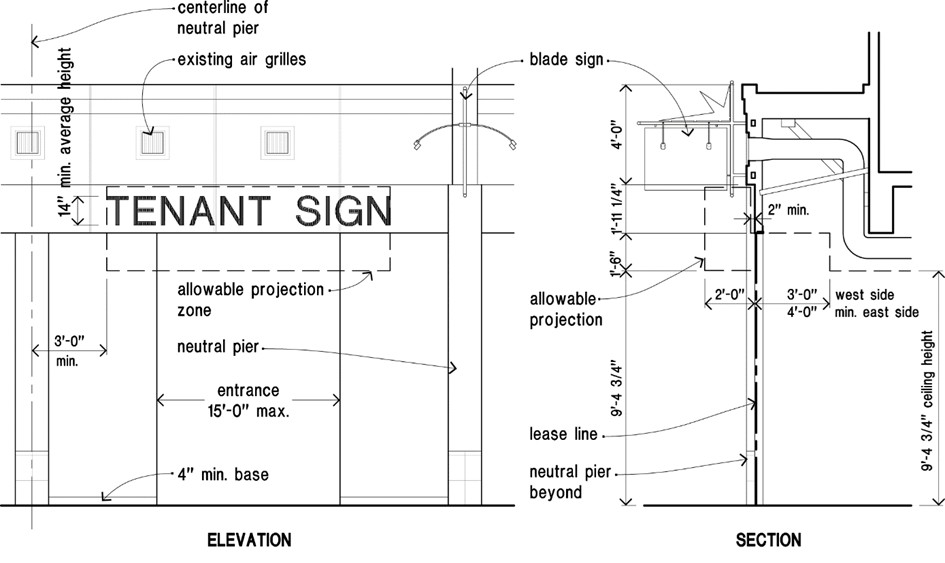
Figure 3.f-a - Storefront at Main Mall (High Ceiling Areas) 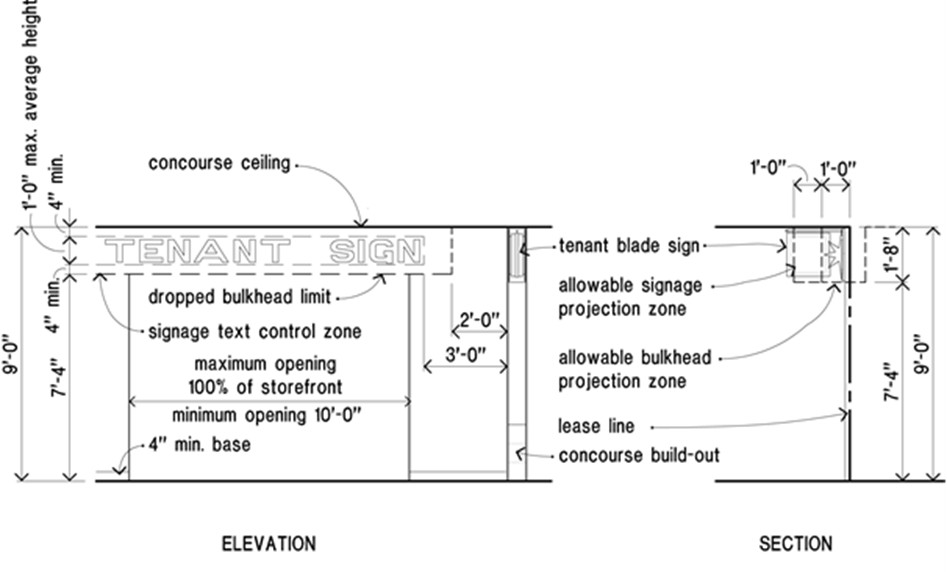
Figure 3.f-b - Storefront at Concourses (Low Ceiling Areas) - General Guidelines
- Landlord encourages signage that balances blending with the surrounding design environment, while contrasting with adjacent tenant’s signs to provide differentiation of identity. Tenants are required to design, fabricate, install, and maintain storefront signs that exhibit imagination, high fabrication quality, and compatibility with adjacent and facing storefronts. All signage designs are subject to approval by MAC and should reflect the unit name and logo at a minimum. Additional verbiage describing the sense of identity of the unit is subject to staff approval. All signs must be Underwriter Laboratory (UL)-approved and labeled (label(s) should be visible for inspections, but out of public view). No exposed raceways, ballast, transformers, sign company names or labels are permitted.
- Creative signage that departs from the traditional will be required. Tenants should strive to develop signage that is an inherent part of the store concept. Signs shall be creatively integrated with base building architectural elements to form a successful composition. Vertical sign bands shown in the diagrams below are for reference only.
- General Guidelines
- Storefront Blade Signs
- Main Mall (High Ceiling Areas)
- Wall supported blade sign.
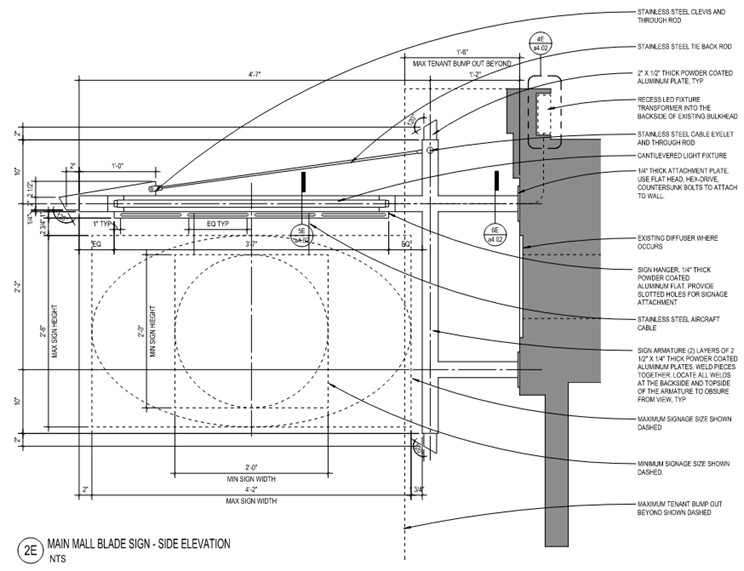
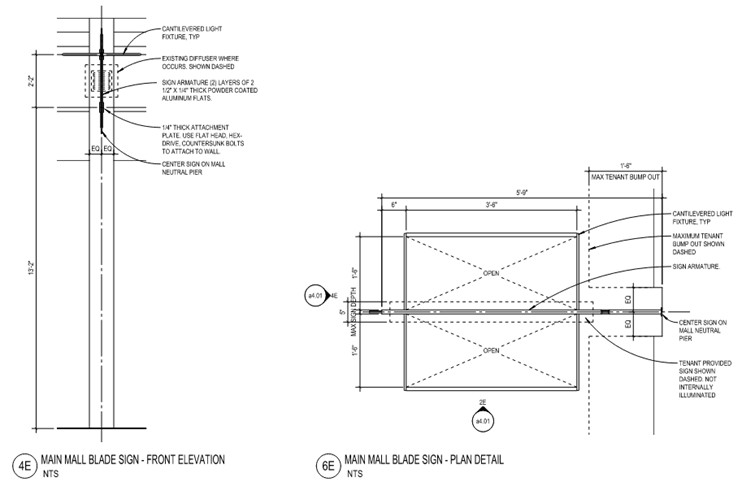
- Sign design requirements and signage armature provided by MAC. Sign provided and installed by tenant unless otherwise noted.
- Armature included cantilevered linear LED fixtures to illuminate the signage face.
- Sign requirements include mounting height and maximum length, height, depth.
- Three-dimensional sign design is strongly encouraged.
- Locate blade sign on center of adjacent neutral pier unless otherwise noted.
- MAC to provide locations of each tenant blade sign to avoid tenant conflicts or view obstructions from overhead walkways.
- Tenant blade sign to be a minimum of 2’-0” x 2’-0”.
- Tenant blade sign to be a maximum of 4’-2” x 2’-6”.
- Tenant signs to be mounted level on signage armature.
- Wires must be plumb when signs are hung.
- Tenant buildout not to exceed 1’-6” to accommodate standard sign depth.
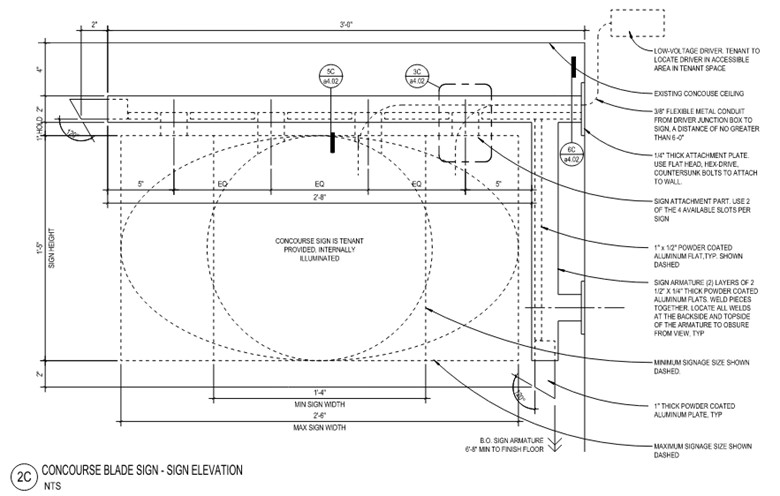
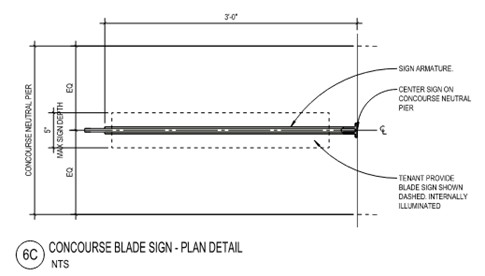
- Concourses (Low Ceiling Areas)
- Wall supported blade sign.
- Sign design requirements provided by MAC. Sign and armature provided and installed by Tenant.
- Sign requirements include mounting height maximum length, height, depth, and internal LED illumination.
- Locate blade sign at edge of storefront.
- MAC to provide locations of each Tenant blade sign.
- Main Mall (High Ceiling Areas)
- Storefront
 Interior Finishes
- Demising Walls
- Demising walls between Tenants shall be centered on the lease line dividing tenant spaces and extend to the structure above. Tenant is to use metal studs for these partitions. Each tenant space shall be separated from other tenant spaces by a one hour rated fire partition. The fire partition is not required to extend beyond the underside of the ceiling unless noted otherwise by the Building Official.
- Demising walls shall not be connected, braced, or anchored to the exterior curtainwall glass or framing system. Walls must be fully self-supporting and designed to maintain required fire-resistance ratings without imposing additional structural or lateral loads on the curtainwall system. Tenants shall detail all work adjacent to the curtainwall to avoid damage to glazing, framing, and waterproofing assemblies.
- Where applicable, demising walls shall not obstruct existing fin-tube radiation; adequate clearance and maintenance access must be maintained at all times.
- Demising walls along exit corridors and other Landlord spaces will be provided by the Landlord from floor to structure above, with accommodation of existing HVAC, plumbing, electrical, etc. When constructed of metal studs, the Landlord will provide gypsum board on the Landlord side only. The Tenant shall provide finishes on their side of the lease line wall.
- The Tenant must fire stop around all structural shapes, ducts, pipes and other penetrations through the fire partition or demising walls. Where the space above the finished ceiling is used as an air plenum and the Tenant’s wall is constructed solid to the structural deck above, provisions must be made for return air to the Landlord’s HVAC unit.
- Additional wall reinforcement or independent support is required for demising walls used to support shelf standards or other heavy attachments.
- The Tenant shall furnish and install a minimum 3’-0” wide by 7’-0” high door connecting to the service corridor. Doors to exit corridors must be fully recessed so as not to project into the corridor when open. The door recesses, where required, shall be provided by the Tenant. All doors and frames opening into the Landlord’s corridor shall conform to the MAC Design and Construction Standards specifications. All doors, frames, and recesses shall be painted to match the corridor paint color. All interior doors used to access fire exit hallways shall be labeled fire door assemblies, complying with local codes and MAC Standards.
- Wall Finishes
- All wall surfaces in the sales area visible to the public must be finished in an acceptable manner. The wall treatments should reflect the image established at the storefront. Finishes considered to be suitable are painted gypsum board or plaster, commercial grade wall coverings, wood moldings or panel treatments, decorative metal, or natural stone.
- Walls in food preparation and utensil washing areas must be smooth, durable, non-absorbent, and easily cleanable.
- Walls adjacent to the drop zone shall be constructed of durable, impact-resistant materials. As a reference standard, MAC typically uses ¾-inch fire-resistive painted plywood with aluminum diamond plate protection and a chamfered top in back-of-house delivery areas.
- The use of the following materials will not be allowed as a wall material in areas visible to the public:
- Extensive use of mirrors or common slatwall,
- Simulated brick or stone,
- Wood grained or simulated pattern plastic laminates,
- Pegboard or corkboard,
- Plywood and rustic or rough sawn wood,
- Carpeting on walls,
- Any other material as determined by the Landlord.
- Any material that does not meet the Design and Construction Sustainability Requirements
- Wall treatments should be finished at the floor with a durable base material such as wood, stone, ceramic tile, or stainless steel. Vinyl or rubber base will not be permitted in areas visible to the public.
- Surface mounted shelf standards will not be accepted.
- Floor Finishes
- A suitable floor finish must be provided by the Tenant at all public areas of the Tenant’s premises. The elevation of the finish floor must match the adjacent common area floor. Bull-nosed tile, reducer strips, or carpet edge guards will not be permitted.
- Floor treatments should be designed to reinforce the character of the store concept and image.
- A hard surface floor material is required at the storefront lease line and must extend at least five feet into the store. Acceptable hard surface treatments include natural stone, hardwood strip floors, or terrazzo. Refer to Specific Design Criteria for exceptions.
- Floor finish materials that are not permitted in sales areas or areas visible by the public are quarry tile, rubber/vinyl flooring, vinyl composition tile, or wood parquet flooring.
- When carpeting is used, the Tenant is encouraged to use patterns and borders to define areas of the store. Carpeting must be of superior quality. Direct glue-down installation is recommended or as approved by Landlord. It is important that flush transitions to other materials be provided to minimize visual distractions and walking hazards. Reducer strips of any kind are not acceptable.
- Tenants must install a sheet anti-fracture waterproof membrane under all tile floor installations, including floor slab and floor penetrations in all toilet rooms, kitchens and similar water-prone areas. Rolled on liquid or fluid membranes are not allowed. The waterproofing must extend a minimum of 4” up the perimeter walls of such areas. Tenant must provide material or devices required to prevent the passage of water or liquids out of these areas.
- The Tenant is required to repair the interior slab as required to provide a smooth, sound substrate to receive tenant finishes. The Tenant shall immediately notify the Landlord if any structural concerns are uncovered during demolition of existing flooring finishes.
- If an expansion joint occurs within the tenant space, it shall be the Tenant’s responsibility to install the finish floor material to this joint in a workmanlike manner. The Landlord will not be responsible for finished floor material installed over expansion joints.
- Ceiling Finishes
- The Tenant is required to provide a ceiling throughout the premises. Exposed structure is not permitted. Provide expansion joints consistent with industry standards. Location of all access panels for above ceiling shut off valves, plumbing traps, electrical controls, etc. shall be shown on the ceiling plan at the time of CPIT plan submittal.
- Approved ceiling systems for the sales area or any area visible to the public include the following:
- Painted gypsum board or plaster,
- Concealed spline acoustical tile,
- 2’ x 2’ acoustical tile with tegular edge.
- Other finishes allowed by code and deemed acceptable by CPIT.
- Access must be provided by the Tenant to any Landlord’s equipment, valves, controls, piping, etc., located above the Tenant’s ceiling.
- Ceiling suspension systems may not be fastened to the underside of the metal roof deck, piping or ductwork above. All fastening devices must be secured to the structure above.
- Combustible materials of any type are not permitted above the finished ceiling.
- Ceilings not terminated tight against a wall surface must be returned to the deck above and sealed.
- Ceilings in food preparation and utensil washing areas must be smooth, durable, non-absorbent, and easily cleanable.
- Store Layout
- Tenants shall give careful consideration to the use of colors and materials on all floor, wall, and ceiling surfaces, complementing the aesthetic and quality established in the main public areas.
- Layouts should react to passengers’ limited time with displays arranged to encourage impulse purchase, ease of browsing and speed of transaction.
- Displays should be attractive and call attention to the products featured, but must not interfere with the egress or access to the store.
- Aisle widths must be adequate for passengers with baggage or luggage carts and also accommodate people with disabilities, particularly those who use wheelchairs.
- Restaurants, lounges, and snack bars should have room available near or underneath tables for the storage of bags and packages.
- The Tenant shall designate a drop zone inside the unit for daily deliveries to prevent storage in shared hallways and public spaces.
- Lighting Guidelines
- The interior lighting system shall comply with the current edition of the State of Minnesota Energy Code and the Sustainable Design and Construction Requirements. These Criteria shall govern the design and installation of all store lighting by Tenant that is visible from the public areas of the terminals. Tenants shall install all lighting subject to the following requirements:
- Window display lighting shall be LED. In general, light sources (including lamps) shall not be visible from the terminal public corridors.
- Spotlights may be recessed, adjustable angle fixtures, or track-mounted adjustable spotlights. All adjustable units must be focused so that brightness is not visible from public area walkways, with the exception of small spotlights.
- Interior General Lighting
- Reference Electrical Systems Design Criteria for additional lighting requirements.
- LED source light fixtures are required for all areas of the tenant space for energy conservation and longevity of the source. LED fixtures shall have a diffusing lens or panel, such that individual diodes are not visible to the public. Fixtures shall be glare free or glare controlled.
- Incandescent lighting is prohibited as a light source.
- Bare lamp fixtures are not acceptable.
- Color temperature of lamps shall be 3000K or 3500K unless otherwise approved by Landlord, with a Color Rendering Index (CRI) of 80 or higher.
- Surface or pendant-mounted track and track fixtures installed for accent lighting may be used.
- The track and fixtures shall be painted to match the ceiling color of Tenant’s store. If the track and track fixtures are a part of the interior decor and other paint finishes are required, they must be approved in advance (in writing) by the Landlord.
- Decorative type lighting, such as pendant units, chandeliers, or wall brackets, may be used only if Tenant has established an identity based on this design theme, and must be approved in advance of build-out by Landlord. No strobe, spinner or chase-type lighting shall be used.
- Luminous ceilings must be approved by the landlord.
- No lighting shall be installed in the common area ceiling for any purpose.
- All self-illuminated showcases and display cases must be adequately lit and ventilated. Direct visual exposure of the light source is prohibited.
- A seven-day, calendar type, 24-hour timing device shall be provided by the Tenant for lighting of Tenant’s storefront and show window areas during required hours which will be designated by the Landlord.
- Interior emergency lighting shall be installed as required by applicable codes.
- All lighting installations must be approved by the Landlord.
- See the “Hennepin County Construction Guide” for additional lighting requirements in food service and retail concessions.
- The interior lighting system shall comply with the current edition of the State of Minnesota Energy Code and the Sustainable Design and Construction Requirements. These Criteria shall govern the design and installation of all store lighting by Tenant that is visible from the public areas of the terminals. Tenants shall install all lighting subject to the following requirements:
- Demising Walls
- Food Court/Food & Beverage Concessions
- General Guidelines
- The Tenant shall provide a dropped bulkhead across the entire width of the storefront at the lease line, to separate the Concourse ceiling from the Tenant provided ceiling, and to create a Tenant sign band. The bottom of the bulkhead shall be a minimum of 7’-4” above finished floor, and shall extend to the structure above. This sign band may project up to 1’-0” beyond the lease line if sightlines to directional signage, or to surrounding tenants, are not obstructed.
- The overhead soffit may be used to house the overhead coiling grille.
- A maximum of 100% of the storefront may be open (without glazing).
- The Tenant must provide a full-height wall separating the sales area from the kitchen, service, and storage area for security; and to shield views into the service area.
- Wall openings between the sales area and service area must be kept to a minimum. Pass-through openings shall be designed to block views into the service area.
- The finish on all walls in the sales area behind the counter shall be ceramic tile. Painted gypsum board or vinyl wall covering is not allowed.
- Ceilings shall comply with Section 3.4 and meet all Health Code requirements.
- The flooring material between the lease line and the recessed counter shall be hard surface. Slip-resistant ceramic tile, natural stone, and hardwood strip flooring are acceptable.
- Store Interior Design
- Floors shall be waterproof. All floor penetrations sealed and waterproofed using Nobel Seal TS manufactured by Nobel Company. Installation shall be in accordance with the manufacturer’s recommendations. All floor penetrations must be placed at locations approved by the Landlord’s representative and sealed. Substitutions will be considered to meet sustainability requirements.
- The Tenant shall provide a floor finish to meet local health department requirements in all food preparation areas. If required, floor leveling fill and any other preparations for the finish material installation will be provided by the Tenant.
- Acceptable Tenant floor finishes in areas visible to the public are slip-resistant ceramic tile, stone tile, and terrazzo.
- The Tenant will provide 5/8” Type “X” gypsum board at the interior of all demising walls from the floor to the underside of the ceiling to provide a one-hour fire rated assembly. Any wall penetrations below the ceiling line for mechanical ducting, piping, electrical, etc. shall be fire dampered/ fire caulked to maintain the fire rating. Tenant wall finishes shall meet local Health Department requirements in all food preparation areas.
- All roof penetrations required for the Tenant’s mechanical equipment must be coordinated with the Landlord and flashed into the existing roofing using a Landlord approved roofing contractor. Slab knockouts exist for consolidation of penetrations.
- Ceiling lighting provided by the Tenant shall be shielded or enclosed to prevent breakage. Tempered or shatterproof-coated bulbs are also acceptable. Illumination levels shall meet requirements outlined by the health department. Light fixture selections are subject to approval by the Landlord.
- Equipment, storage stock, etc. loading not to exceed 100 lbs/sf.
- Sales Counter
- The main serving counter will be constructed by the Tenant a minimum of 6’-0” behind the lease line to allow for queuing and service to occur within the Tenant space.
- The counter dimensions must comply with MN Chapter 1341 and ADA requirements.
- The front counter must present a clean, uncluttered appearance. Food service equipment, beverage dispensers, cash registers, and other equipment must be concealed from view as much as possible.
- Open storage of paper goods, packaging, and supplies is not permitted.
- Access through the front counter is not permitted, unless no rear service door is possible.
- Napkins, condiments, utensils, straws, and trays must be concealed behind the front counter or recessed into the countertop.
- Sneeze guards and/or tray slides (when required) must be custom designed as an integral part of the front counter and be constructed of glass and stainless steel or brass.
- The countertop must be constructed of solid polymer surfacing (Corian or equivalent), Granite, or manufactured Quartz. Plastic laminate or ceramic tile is unacceptable.
- The face of the counter may be of the following materials:
- Marble or granite,
- Ceramic tile,
- Solid polymer (Corian or equivalent),
- Hardwood, stained or painted,
- Metal (stainless steel or brass),
- Other durable, non-porous material approved by the Landlord and meets the Design and Construction Sustainability Requirements.
- The Tenant must provide a 6” high ceramic tile base along the entire length of the counter. The base shall be recessed to create a toe space. The base must grouted solid throughout the depth of the casework.
- Glass display cases constructed of clear glass and stainless steel, brass, or bronze; will be permitted to a maximum height of 4’-8” and maximum width of 25% of the storefront width. Display cases may not extend past the face of the countertop.
- No food preparation areas or display cases are allowed in a zone 24” from the edge of each neutral pier and within 18” of the finished floor.
- Menu Board
- All Concourse Food Service Tenants are required to provide one menu board, mounted on the rear wall of the sales area or on a suspended fascia. Digital menu boards are encouraged. Internally illuminated box signs must be recessed. These menu boards shall be integrated into the overall design. Provisions should be made for changing prices or products in an undetectable manner.
- Adjustable track lighting concealed from view in an alcove directly in front of the menu board is also an acceptable means of illumination for the menu board.
- All menu boards and photos of menu items shall be professionally designed and fabricated, and be integrated with the Tenant’s graphics and merchandising design.
- The menu board signage shall be of proper size, color, and illumination level to be readily visible from the common area. The storefront fascia shall not block views to the menu board.
- Product Display
- Creative display of food and beverages is required of all Tenants. Menu selections may be presented behind glass sneeze guards on the front counter.
- All pre-packaged foods must have proper labeling per Minnesota Food Code. Visit https://www.health.state.mn.us/communities/environment/food/docs/fs/foodlabelfs.pdf for more information.
- Decorative products, ingredients or products in decorative packaging may be displayed on open shelves at the front counter and throughout the Design Control Area.
- Any food preparation that can be done in an attractive or theatrical fashion may be done at the front counter or in public view.
- All items must have individual item shelf tags with product description and price, or be directly marked with price on each item.
- Graphics
- Tenants are encouraged to dress up their space with professional quality graphics, photographs, and artwork. Exciting and vibrant combinations and uses of materials are desirable. Any artwork displayed in a food preparation or bar area must be cleanable.
- Graphic elements must be located at a minimum of 6’-0” behind the lease line and between 5’-0” and 9’-0” above finished floor. They must be planned and designed as an integral part of the design control area.
- Disorganized or handwritten temporary signs will not be permitted. “Employment Opportunities/Help Wanted” or any signs implying such are prohibited unless approved in writing by the Landlord. “Daily Specials” advertising signs or for seasonal or temporary promotions must be integrated into the menu boards or into permanent sign holders.
- Food Court Public Seating Areas
- Food courts are essential spaces supporting multiple-concept, and sometimes multiple-tenant, quick-serve, grab-and-go, and other types of food and beverage establishments located about a central public gathering and seating area. To effectively implement sustainable, durable, cleanable, and efficiently organized public amenities such as this, the following items are provided to guide design and construction decisions for these public spaces.
- Qualities of these spaces are: well-lit, open, inviting, clearly defined and orderly seating areas that are easily navigated by all passengers with companions and luggage. The introduction of daylight and views of the airport and airfield should be used when possible.
- Multi-story spaces and spaces with additional existing architectural features, such as skylights, views to airport activities, windows to airfield activities, etc., should fully utilize those existing conditions and structure public spaces leveraging those existing conditions in an architecturally harmonious method when possible.
- Finish materials utilized within the food courts shall be durable, as per existing standards and existing built-conditions and must demonstrate a reasonable opportunity for cleanliness (including perception of cleanliness), maintenance, repairs, and organization. This includes furnishings, built-in/millwork, flooring, ceilings, fixtures, light fixtures, etc.
- Seating
- Seating quantities shall be maximized, with the final ratio of seating SF to operations determined by the Concessions Planning and Implementation Team (CPIT), with the highest percentage of seating dedicated to solo-seating. The seating should include flexible two-tops (and some four-tops) with banquette seating. A free-floating (planned) mix of two-tops and four-tops should represent the smallest amount of seating types. Tables and counters in these areas should be 30” above finished floor. Multiple four-tops, 30” above finished floor, with legs at its corners, shall be provided at banquette seating and in open/free-floating seating areas to provide for greater accessibility. Standing-height counters (42”) may be provided in areas of limited space availability but must be coupled with equal numbers of lower counters that are at an accessible height.
- Seating shall be organized by architectural elements meant to divide food court circulation from seating, concourse circulation from seating, solo-seating from banquette seating, etc., and shall provide for an easily reorganized seating arrangement (allowing cleaners to focus on cleaning, rather than continually straightening the area). Banquette seating shall have easily removable seats and backs for reupholstering and cleaning in open cavities. The banquette seating cavities under seating and/or fixtures shall be on 6" legs, castors or filled with a light-weight concrete slurry to for ease of cleaning and to prevent harborage.
- A minimum seating-to-prep/BOH square-foot ratio of 1:1 or greater is required for food courts and sit-down restaurants in order to provide for adequate opportunities to eat at or near the chosen venue.
- Ingress/egress from the space shall be clear and wide enough for queuing, seating, and walk-aisle paths. Well defined travel paths to the multiple units, as well as multiple entries and egress points, shall be provided coupled with disposal receptacles at exit locations. These entries shall be clearly marked and allow for views through the space to all tenant units, and may include other directional wayfinding to assist the guests with the less-visible units. Queuing shall be directly in front of unit with a clear order and pickup area for quick-serve units.
- Three (3) types of disposal receptacles shall be provided by Landlord, (1) trash, (2) recycling, and (3) organics recycling. These separate containers shall be built into architectural dividers or positioned along the dividers. In order to maximize receptacle use, the receptacles shall be placed alongside the egress paths at the exterior of the food court. A built-in fluid disposal unit adjacent to the trash receptacle will be provided by Landlord.
- Power shall be provided at counters, behind banquette hard walls, and at as many tables as possible.
- Lighting may be utilized to call out certain types of seating, create a more human-scale space, and augment general illumination. Lighting must be LED lamped, and should follow existing installed lighting types in public seating areas including food courts.
- Signage at food court tenant units shall follow existing guidelines and MAC Design and Construction Standards.
- General Guidelines